Your Smile Deserves the Strongest Shield!
Hello, friends! I’m so excited to share something really important with you today. I get emotional about teeth, you know? Your smile is one of the first things people see. It’s a huge part of your confidence. But what if the shield protecting your amazing smile slowly starts to disappear?
That shield is called enamel.
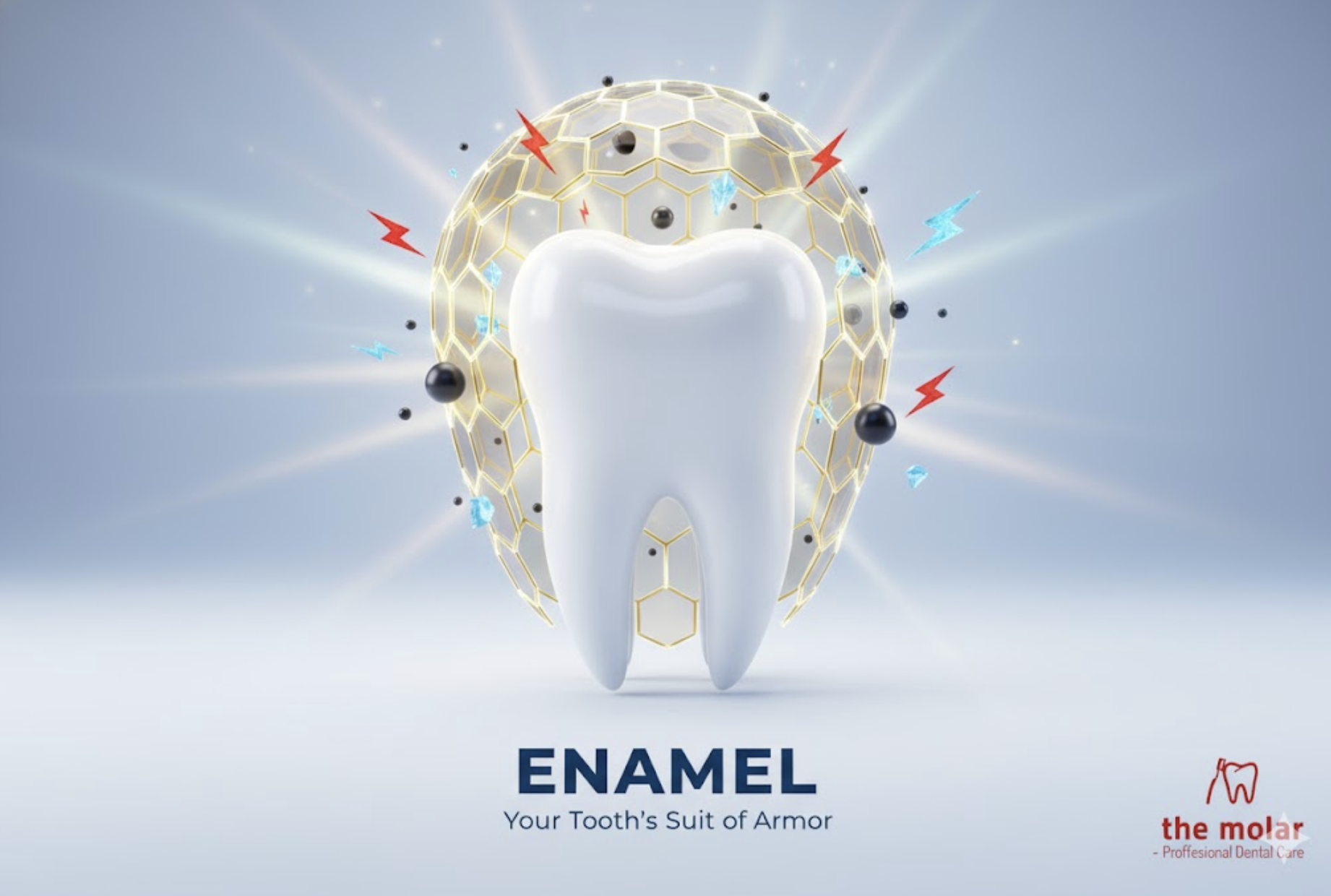
Think of your tooth enamel as a suit of armor. It’s the super-hard outer layer that keeps the soft, sensitive inside safe from everything—hot coffee, cold ice cream, even the tiny acid attacks from your favorite soda. It’s tough, but it’s not unbeatable.
Enamel erosion is a sneaky problem. It means this protective layer is being worn away. Here’s the scary part: Once enamel is gone, it’s gone forever. It doesn't grow back! That’s why we need to talk about this now. We need to catch it early.
I want you to feel empowered. I want you to know the signs, understand the causes, and see how easy it is to protect your teeth. Let’s dive in and save those beautiful smiles together!
Ready to Protect Your Smile?
Let’s get your enamel checked and put a strong shield back on your teeth.
Book Your Appointment Today: Click Here to Book Appointment
Call Us for Immediate Help: Mobile no: +918329110882
Visit Our Homepage for More Dental Tips: The Molar Dental Care
What Happens When Your Enamel Wears Down?
When your enamel is strong, your teeth look bright and feel great. But when it starts to thin, two main things happen.
First, your tooth gets sensitive. Ever bite into something cold and feel a sharp zap of pain? That pain isn’t normal. It means the acid has eaten through the shield, and the cold is hitting the soft nerve layer underneath. It feels awful, and it makes enjoying simple foods a struggle. That’s your tooth crying for help!
Second, your tooth can start to look yellow. The enamel is naturally white and opaque. When it thins, it starts to let the color of the soft layer underneath—called dentin—show through. Dentin is naturally yellowish. So, your bright white smile looks dull or yellow. It’s disheartening, right?
The bottom line is simple: Losing enamel makes your teeth hurt, look less bright, and become much more likely to get cavities or even break.
5 Big Signs of Enamel Erosion (Don’t Ignore These!)
It’s easy to miss the early signs. We just live with the pain sometimes. But please, pay attention to these five clues.
1. Tooth Sensitivity: The Sharp Warning
This is the most common sign. You feel a sudden, quick, sharp pain when you eat or drink things that are:
- Hot (Tea, soup)
- Cold (Ice cream, cold water)
- Sweet (Candy, juice)
It’s your teeth saying, "Ouch! That hurts!" If this happens often, especially in the same spot, it’s a huge red flag.
2. Changes in Color: The Yellowing Effect
Look closely at your teeth in the mirror. Do they look duller than they used to? More yellow? Remember, this is because the white enamel layer is getting thin, showing the yellow dentin layer beneath. If your smile is losing its spark, enamel erosion could be the reason.
3. Smooth or Rounded Edges: The Loss of Shape
Healthy teeth have clear, defined edges. But when enamel wears away, the edges of your teeth can start to look smooth, rounded, or even glassy. They might not feel as sharp when you run your tongue over them. This is literally your tooth structure being sanded down by acid.
4. Cracks and Chips: The Fragile Tooth
When your enamel thins out, the whole tooth becomes weaker and more fragile. You might notice tiny cracks, or worse, you might chip a tooth doing something simple like biting into a piece of toast. A strong tooth shouldn't do that! Thin enamel is the cause.
5. Small Dips or "Cupping": Little Hollows
Take a look at the biting surfaces of your back teeth (the molars). Sometimes, small hollows or dents start to form. Dentists call this "cupping." This happens right where the enamel is thinnest on the chewing surface. If you see tiny dips, that means the shield is breaking right there.
🦷 Hot Tip: If you notice sensitivity that doesn't go away after a week, it’s time to call the dentist. Don't wait until the pain is constant!
Why Is This Happening to My Teeth? The Simple Causes
Enamel erosion isn't a mystery. It almost always comes down to two big factors: acid and friction. Let’s break down the main culprits.
1. Acidic Foods and Drinks (The Number One Enemy)
This is the biggest cause. When acid hits your enamel, it slowly dissolves the hard minerals. You don’t even realize it’s happening! What foods are the worst?
- Carbonated drinks/Sodas: These are full of sugar and acid. It’s a double whammy for your teeth.
- Juices: Even "healthy" juices like orange, lemon, and grapefruit are very acidic.
- Sour Candy: The acid in the candy lingers in your mouth, attacking your teeth for minutes.
- Vinegar-Based Foods: Salad dressings with lots of vinegar, like Italian dressing, are acidic.
2. Stomach Acid Problems (Acid Reflux)
Sometimes the acid isn't coming from outside, but from inside your own body. If you have acid reflux (GERD) or suffer from frequent vomiting, stomach acid can come up and wash over your teeth. This acid is extremely powerful and can wipe out enamel faster than anything else. This is a health problem you need to talk to your doctor and your dentist about.
3. Dry Mouth
Saliva is your body’s natural defense! It washes away food bits and, most important, it naturally neutralizes (or cancels out) the acid in your mouth. If you have a dry mouth (called xerostomia), you don’t have enough saliva to do this important job. The acid just sits there, eroding your teeth.
4. Teeth Grinding (Bruxism)
This cause is about friction, not acid. If you grind or clench your teeth, especially when you sleep, you are literally wearing the enamel down by scraping it against itself. This is like sanding down your own protective layer. If you wake up with a sore jaw, you might be a nighttime grinder.
5. Brushing Too Hard
Yes, brushing is good, but hard brushing is bad! If you use a hard toothbrush or press down with all your strength, you are scratching the enamel. Over time, you can wear it away, especially near the gum line. A gentle touch and a soft-bristled brush are always the way to go.
Hope is Not Lost! Treatment and Prevention
I know this all sounds scary. But here is the amazing news: We can stop it! And we can fix a lot of the damage. Since we can’t grow the enamel back, the goal is to protect what you have and repair what you lost.
Ways Your Dentist Can Help You:
- Fluoride Treatments: This is a simple, quick treatment at the dental office. Fluoride is like a special mineral booster. It strengthens the existing enamel and makes it much more resistant to future acid attacks. It’s a huge protective step!
- Dental Bonding: For spots where the enamel is noticeably chipped, worn, or yellow, your dentist can apply a tooth-colored resin (a special filling material). This material covers the exposed dentin, restores the shape of your tooth, and brings back a smooth, natural look. It’s a great way to repair the shield.
- Mouthguards: If you grind your teeth, a custom-fitted mouthguard is a must. It puts a soft barrier between your upper and lower teeth so they don’t rub against each other at night. It saves your enamel from the stress of grinding.
- Sealants: These are often used on the chewing surfaces of back teeth. The dentist paints a thin, plastic coating into the grooves of the tooth to shield the enamel from acid and chewing forces.
Easy Daily Changes You Can Make:
- Stop Sipping: Don’t sip sodas, juices, or energy drinks all day. Every sip is a new acid bath for your teeth. If you drink something acidic, try to finish it quickly.
- Use a Straw: When you drink sodas or juices, use a straw. It helps move the liquid past your teeth, lowering the contact time with the enamel.
- Rinse with Water: After you eat or drink anything acidic, don't brush right away! That just rubs the acid into your teeth. Instead, swish water around in your mouth for about 30 seconds. This washes away the acid and brings the mouth's pH back to normal.
- Use Desensitizing Toothpaste: Your dentist can recommend a special toothpaste that helps block those painful nerve signals. It can bring you a lot of relief!
- Soft Brush Only: Switch to a soft-bristle toothbrush and use a light, gentle, circular motion. Brush for a full two minutes.
Don’t Wait to Get Help!
If you’re reading this and feeling that zing of pain or seeing that yellowing color, please don't wait. Enamel erosion doesn't stop on its own. It only gets worse. The sooner we act, the less damage is done, and the easier the fix will be.
At The Molar, our team believes in saving your natural smile. We use simple tools to check your enamel health and then create a plan that fits you. Whether you need fluoride to strengthen your teeth or bonding to restore their look, we’ve got you covered.
Your smile is worth protecting. Give it the care it needs!
Questions You Might Have
How can I tell if my toothpaste is making my teeth worse? How long does it take to fix a chipped tooth from erosion? What foods are safe to eat if my teeth are already sensitive? How often should I see a dentist to check my enamel? How can I stop grinding my teeth at night?
Ready to Protect Your Smile?
Let’s get your enamel checked and put a strong shield back on your teeth.
Book Your Appointment Today: Click Here to Book Appointment
Call Us for Immediate Help: Mobile no: +918329110882
Visit Our Homepage for More Dental Tips: The Molar Dental Care